-
Jane Maree started the topic {2018 – Week 4} Passive voice vs Active voice in the forum Annual Theme Discussion 8 years, 3 months ago
Passive Voice. It’s another one of those phrases that you might’ve heard thrown around, but not entirely understood what it means. (I know I certainly didn’t understand what I meant for the first three years of writing, at least.)
Passive voice is when the subject of the sentence is acted on by the verb, rather than the subject doing the acting (which is Active voice).
Now, before you run away screaming because you didn’t understand that sentence, give me a moment and I’ll explain it using a few quick examples.
Passive Voice: The ball was thrown by Tom.
Active Voice: Tom threw the ball.Passive Voice: There was no keyhole.
Active Voice: I fumbled all along the door, but not even the tiniest keyhole interrupted the smooth wooden boards.Passive voice is a very easy pitfall to tumble into. We all struggle with it. Literally all of the writers in the world. So if you do, don’t feel awkward about it. If you don’t, go home and reevaluate your life because you mightn’t be human after all. xD
THE WHY:
Why should you use active voice instead of passive voice?
Active voice instantly brings the action and the characters closer to the reader. You could almost imagine that the ‘was’ or the ‘had been’ are pushing the reader out of the story, but the active phrases without those lazy auxiliary verbs.
The more active your prose is, the more it draws the reader in.
(NOTE: When I say ‘active’ I don’t mean ‘action filled.’ I just mean that the phrasing is active voice rather than passive. Don’t let me lose you. 😛 )
“I felt scared” is much more boring than “My pulse was roaring in my ears and my hands were shaking like leaves.” But that’s obvious. Everyone can tell that “I felt scared” is a boring sentence. However it’s harder to realise that the second sentence only needs two words changing to make it way better too.
“My pulse roared in my hears and my hands shook like leaves.” That sentence is active voice, as opposed to the ‘pretty good but not totally good’ passive voice sentence. While the passive voice description was a lot better than the telling ‘I felt scared’ it still was much better in active voice, and active voice draws the reader in far more closely.
Just changing ‘was roaring’ to ‘roared’ and ‘were shaking’ to ‘shook’ changed the strength of the sentence so much, and really makes it easier for the reader to connect with the character.
Let’s have two more examples to illustrate what I mean. The first example is actually a snippet of the first full novel I ever wrote (in 2015). The second is written three years and seven full novels later, and I just wrote it up right then as a sort of ‘rewrite’ of the original snippet.
EXAMPLE ONE:
I saw a door in the left wall and I went over to it and tried to open it. I figured it had been barred on the other side and I couldn’t get it open. There was no key hole on this side so I stood for a second or two, thinking.
EXAMPLE TWO:
A door! Just to my left, and no guards on this side, at least. I bounded across the room and tried the latch. It stuck as hard as a stubborn dragon. I closed my eyes for a moment, letting out a slow breath. I had to get the door open, but without a keyhole–or a key, for that matter–and the latch locked from the other side… Dragging a hand across my forehead, I pressed my lips together. Well, I’d just have to keep trying. There must be some way out.
In the second example you don’t see any of the unnecessary “was” or “were”, and it’s much stronger because of it. (It also has the bonus of character voice as well, so that’s nice too.)
Hopefully I didn’t do too bad a job at explaining this and maybe you guys aren’t totally confused–But if you are, don’t hesitate to ask me to clarify what the hooley dooley I was even trying to say. xD
The activity: write a describing scene to go with the image below (you can make it any genre you want, and pick any character). You have to describe the setting, the POV character’s emotions, and include what the character can hear, smell, and see but WITHOUT using any of the lazy words. No ‘was’ ‘had been’ ‘were’ etc. Keep that active voice nice and strong. 😉
(Do keep in mind, though, that words like ‘was’ sometimes are necessary and not actually lazy at all. You can use them somewhat, just not too often.)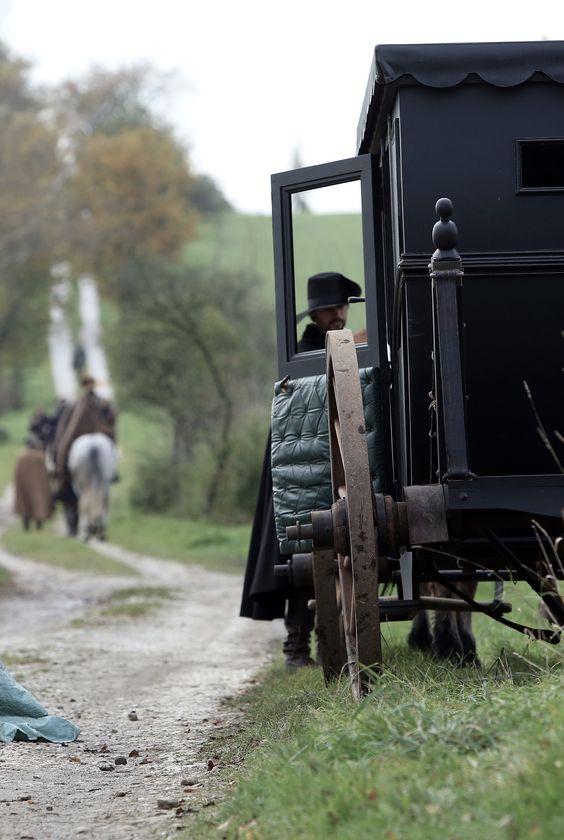
@inspirewrite
@valtmy
@esther-sears
@parker
@caleb-e-king
@h-jones
@selah-chelyah
@writerpiper
@jessi-rae
@theswordinthebook
@thewirelessblade
@fctait
@faith_blum
@professorsjb
@spottedlivvie
@katthewriter
@lightning-spider
@skye
@_simplybee


Article Categories