The Great Commission tasks us with a heavy responsibility—not just to proclaim the gospel but to witness to others through the testimony of our lives, our work, and our relationships. As storytellers, we face a unique challenge: How can we universalize our message when fiction encompasses a broad audience with a wide range of beliefs?
Taking Dominion with Your Stories Involves More Than Fighting Culture Wars
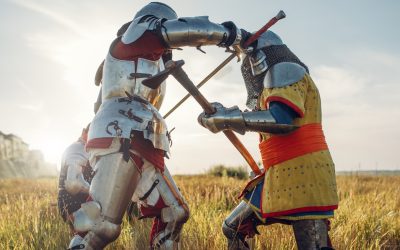
The Bible’s language can sound harsh to modern ears. When God commands Adam and Eve to “take dominion” in Genesis 1:28, the images that phrase conjures up may make a few readers cringe. How does aggressive behavior align with the New Testament’s exhortations to be humble and meek? The instruction raises even more questions for us as writers. If God wants humans to rule over the whole Earth, shouldn’t that encompass fiction? And what tactics are we supposed to use when claiming the territory for His kingdom?
Bearing God’s Image as a Storyteller Involves More Than Exploring Christian Themes
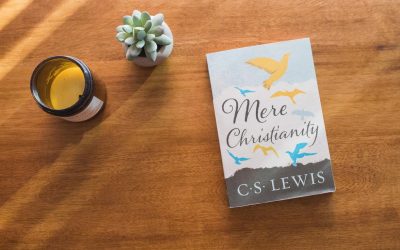
“Bearing” the image of God ought to be an active verb, because it’s a mad dash with no finish line. To steal from C. S. Lewis, it continually guides us “farther up and farther in.” God has bestowed this gift and responsibility on all of mankind, but not everyone intentionally pursues it. Even Christians are confused. We assume image-bearing means that God physically resembles us, or that we share His attribute of creativity, so we don’t need to invest much effort. We can just “be ourselves,” throw in a few Scripture quotations, and call what we’ve created good.
2 Skills You Can Learn from Writing in a Different Genre
Everyone has favorite genres that they fill shelf after shelf and hour after hour with. One of mine is contemporary fantasy. Yours might be romance and historical fiction. But, outside of binging and overspending on those, you probably read more eclectically. You don’t mind picking up a mystery or fairy-tale retelling when the blurb draws you in. After all, you’ve heard over and over again that diversifying your reading material increases your creativity and understanding of story craft. Reading outside your comfort zone, however, is not nearly as challenging as writing outside your comfort zone.
Comparison Isn’t Your Biggest Problem (and Other Ways Envy Makes Writing Miserable)
The most helpful writing advice I learned this year came from the letters of a demon. C. S. Lewis published The Screwtape Letters serially in a newspaper called The Guardian, and he realized that the human race harbors an oversized sense of entitlement. Because others have more than we do, we think we deserve the same amount. In idle moments, we wake our phones and thumb through twenty social media posts per second. We read glowing reviews for a debut novel that the author pounded out in two months. We see friends gushing about their book deals, finished drafts, and beta-readers-turned-fans. They’ve achieved their goals while we haven’t. We try to celebrate with them. We extend perfunctory congratulations, but inwardly we can’t resist asking, Why not me?
How to Increase Your Efficiency When Researching for a Historical Novel
Writing historical fiction requires a level of thoroughness that exceeds other genres. Instead of constructing new worlds, you’re representing bygone people and places. You might pore over book after book in your library’s reference section, or you might scroll through dozens of online articles. Maybe you’ll even do both! Whatever time period your novel resides in, the amount of information you need to accurately portray it can seem overwhelming.
3 Ways to Build Stamina for a Writing Career
Millions of books release each year—yes, millions. Between traditional and indie publishing, the number of new titles entering the market is staggering. Maybe those statistics boost your confidence that someday you’ll sign a book contract. If a million writers can slink past picky acquisitions editors, so can you. Or maybe the fear of missing out torments you. You’re struggling to finish your draft—what if no one ever expresses interest in your work because the proverbial field is already scattered with others’ stories?
3 Ways That Writing Nonfiction Helped My Career as a Fiction Author
Fiction is my wheelhouse, my first and last love, my comfort zone, the place where I shine. So, when I noticed Story Embers’ Instagram advertisement for an article writer, I scrolled past it. I couldn’t be the person they were looking for!
Why Children’s Fiction Writers Need to Provide Readers with Good Role Models
Kids’ minds are like clay. Everything they see and experience leaves a mark, and for better or for worse, the impression is difficult to remove later. I don’t recall much from my childhood, except the characters who took me on grand adventures. However, a startling amount of elementary and middle-grade fiction promotes damaging ideas—you know, the whole “parents are the worst, kids are smarter than adults, rebellion is cool” schtick. Because stories influence how children perceive the world, we should be especially careful when crafting entertainment aimed at them.
5 Stylistic Mistakes Most Writers Overlook
Writers tend to treat the fine points of writing like chemicals in a science lab. Some jumble style and grammar in an intellectual test tube, uncertain which combination will produce the desired effect. Others avoid the subject because they’re worried it might encumber their creativity and make their writing monotonous.