

By Cainon Leeds
I was twenty-four, my friend,
and getting married; we had no idea
what we were getting ourselves into
when we passed over
the field of poppies
that said, “We are the numbers
to end all numbers. You can try,
but you cannot count us
away.” And we walked into the gaping
museum doorway. We watched
a documentary in a darkened room
that held its projector-screen face
in its black-gloved walls and said,
“I am the question
to end all questions. You may ask,
but you may never answer
the immortal why.”
Then we walked out into the open,
where cannons waited to be petted,
and rifles and machine guns slept behind glass.
The helmets and canteens hanging over them said,
“We are the emptiness
to end all emptiness.
You may have your fill
of battle dates, model numbers, and casualty figures,
but you cannot know the emptiness
of the last drop from your best friend’s canteen
and the weight of his helmet strapped to your back.”
In a humble corner of the next room,
shielded from the gas grenades and med trucks,
there hung two rifle-length, black-and-white photos
of young recruits before Argonne,
all dressed up in last century’s best
and ready to play war.
Through the looking glasses, we could see them
smiling, standing on both legs, throwing
connected arms around each other, eating
up their day in the sun in front of the camera.
Leaning in closer, we could see their faces:
some serious, some smiling and unkempt like the wind,
and some with acne spots like fresh mortar scars.
One dreamt of buying a motor car,
another was planning to go to Oxford,
and the one beside him had trained
for the Olympic hundred-meter dash since age eight.
Together, they said, “We were the soldiers
to end all soldiers,
and we had no idea
what we were getting ourselves into
when we signed up for the war to end all wars.
We were fifteen, nineteen, twenty-four,
and some of us never married,
never went to school,
never bought homes,
never had kids or grandkids,
never took them fishing in the creek back home,
never watched our wives grow old,
never told them they were beautiful
with our dying breath.
Our hopes and dreams,
the firstborn of our futures,
were blindfolded,
led to an empty trench,
and gunned down
in front of our eyes.
You may scratch your eyes out
because you just can’t stand the mustard gas memories,
but you may never unsee what you’ve seen
here today.”
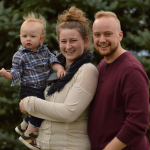
Cainon Leeds is a Business Intelligence Developer from Iowa. When he’s not at work, he spends time with his family, practices photography, and hones his poetic skills. He’s authored several poems, including the 2016 Hackney Literary Award 2nd place poem, “Helga,” as well as “Autumnal Equinox,” “Napoleon,” and “Evangelism.” You can reach him through his Facebook page.


We have visited this wonderful museum in Kansas City. It is a treasure, one of the best museums we have ever been to–that includes the Smithsonian ones in DC. Very well curated.
Wow. I love this. Stunning.
That is spectacular. What a masterpiece!
This is a beautiful poem that brings the horror of war to life. Very well written and thought provoking!
I appreciate you took the time to write this. It was touching and beautiful, and I’m truly glad I stopped by to read it.