Latest Articles

How to Cultivate Powerful Moments of Wonder in Storytelling, Part 1
As I stared at the blank page beneath the title of this article, my mind revisited all the stories that have given me a transformative experience. I love when my heart skips a beat and I pause to process the exhilarating symphony that the words are orchestrating in my imagination. Or when I come to an ending so satisfying that I’m amazed.

A Writer’s Guide to Crafting Realistic Survival Scenes
Learning how to portray characters braving the wilderness is far more applicable than writers assume. Though it’s habitually associated with the survival niche, you don’t need to be writing a Hatchet style novel to benefit from understanding the tactics that save people when they’re fighting the elements. In historical fiction, your protagonist may flee into the woods to escape a political enemy. In speculative fiction, he may cross a desert in search of an old friend, or perhaps he gets marooned on an uninhabited planet after an intergalactic war. Whether the savage landscape is the world of your novel or merely occupies a chapter, training your imagination to picture it accurately is important.

How to Determine Where to End Your Contemporary Novel
When I enrolled in a creative writing class, participating in the assignments presented a dilemma for me. Throughout my life, I’ve gravitated to speculative fiction, because it allows me to explore extraordinary settings where bold characters and dramatic conflicts abound. After years of writing almost exclusively in that genre, its framework became second nature. Then my writing professor challenged me to confine my imagination to the real world and describe common daily experiences like drinking coffee, completing tasks at a job, and taking notes during class.
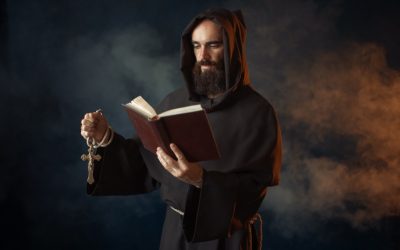
How to Authentically Write Religious Characters without Resorting to Stereotypes
In cheap secular entertainment, the value of faith is chronically underestimated and mischaracterized as either irrational belief without evidence or arbitrary adherence to a set of dogmas. On the other side of the spectrum, Christian novels and films sometimes flaunt a cleaned-up, Sunday-best version of faith that, to be fair, is not much of an improvement on mainstream media’s interpretation—which only exacerbates the problem.

Stylistic Tips to Enhance Both Brief and Lengthy Sentences
A book that’s the clone of hundreds of others won’t capture or keep a reader’s attention. Every sentence—the flesh and muscle of a story—must glisten. The most legendary writers, like Ernest Hemingway and Virginia Woolf, are memorable because they honed their own idiosyncrasies into pleasing forms of expression. If you hope to write evocatively, you need to learn how to capitalize on any sentence length.

Article Categories